Press coverage
Publications, interviews, media appearances, and expert commentary featuring us.

Profiting from “halal”. Giveaway scams. Course fraud
Bloggers promote online casinos, sell useless courses, run illegal giveaways and make millions from the trust of their followers. Chasing the illusion of a big win, people sell their apartments, take on debt and ultimately end up with nothing. In this episode, we examine what Kazakhstani influencers are willing to do for money, how they lure followers into online gambling, how much they earn from their audience’s trust, and why people in Kazakhstan continue to believe self-proclaimed “success gurus”.
Timestamps:
00:00 – Are Bloggers Above the Law?
01:10 – Illegal Giveaways?
10:10 – Gone Too Far!
15:39 – Financial Pyramids
How to identify a financial pyramid scheme and avoid losing money?
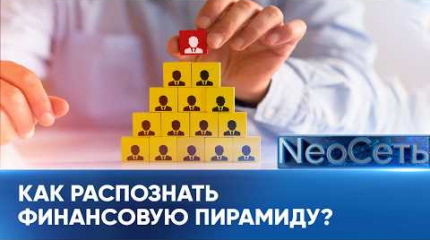
Financial pyramid schemes are built on promises of easy profit and the desire for quick enrichment. Their existence depends on a constant inflow of new participants. Such schemes are often disguised as attractive financial opportunities. In the latest episode of the programme "NeoSet", experts discuss sophisticated pyramid schemes, hidden warning signs and practical ways to protect your money from fraud.

Dollar at 472: sell or wait?
00:00:45 — Why the tenge is strengthening despite the predictions of “social media experts”.
00:01:07 — National Bank governor's statement: the dollar is no longer a savings instrument.
00:02:04 — What artificial intelligence recommends: when to buy dollars and when not to.
00:05:22 — Comparing returns: why a tenge deposit can outperform a foreign currency deposit.
00:06:27 — Kazakh corporate bonds as a way to earn up to 20% annually.
00:07:20 — Why people still rush to exchange offices (the psychology of expectations).
00:10:52 — Key advice: which currency to save in if you plan to study or receive medical treatment abroad.
00:12:13 — How much those who bought dollars at 500 tenge three months ago have lost.
00:15:41 — Assel Aulbekova’s forecast: why the tenge remains fundamentally weaker than the dollar and the rouble.
00:18:41 — Market comparison: 11 companies in the KASE Index versus hundreds in the S&P 500.
00:19:21 — Dollar-cost averaging: how to buy foreign currency in stages when you have a large amount in tenge.
00:22:41 — Return rankings: gold (38%), real estate (30%) and crypto (110% for those who entered at the right time).
00:25:26 — How to distinguish a genuine IPO from a fraudster’s trap.
00:26:36 — “Overcoming greed”: why the pursuit of quick profits turns investors into gamblers.
00:31:03 — How to buy “the entire Kazakh economy” through a KASE Index ETF for just a few tenge.
00:32:18 — What a mutual investment fund is and how to start investing with minimal knowledge.
00:33:38 — Global experience: how people save and invest money in the United States, Germany, Türkiye and Japan.
00:36:50 — Analysing “100% per month” offers: why people still believe marketplace fairy tales.
00:39:31 — Key pyramid scheme red flags: hourly or daily payouts and mandatory referrals.
00:40:11 — “Geosayasat” segment. Political shake-up within Trump’s team.

Will e-commerce become Kazakhstan's new oil?
Phone scams and fake investment schemes are on the rise
Online romance cost her 12 million tenge
Fraudsters have turned their attention to online dating and are targeting people looking for love on Threads. The Ministry of Internal Affairs’ Department for Combating Cybercrime urges Kazakhstanis to be especially cautious of posts seeking a husband or wife. Behind such profiles may be scammers whose only serious interest is your wallet. The scheme usually follows a familiar pattern: online conversations, emotional attachment and, eventually, requests for financial assistance. Many people do not realise that these profiles may not belong to real individuals at all. The photos can be generated by artificial intelligence, while the content is often generic and template-based.
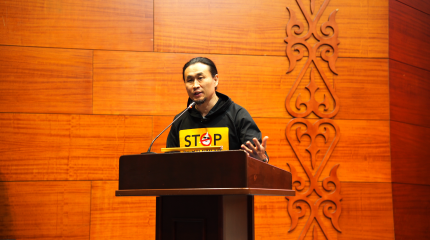
Cybercrime prevention seminar for students
Artificial intelligence is increasingly being used not only to advance technology, but also to carry out cyberattacks. During the seminar, students in Astana learned how fraudsters use AI in telephone and online scams, and how law enforcement agencies are working to counter these threats.

Fear and greed: How do scammers manipulate us?
Kazakhstanis lost nearly KZT 117 billion to fraudsters in the first nine months of last year. In this episode, we break down the most common scam schemes and explain how fraudsters operate today. Why are teenagers being drawn into criminal schemes? How do dreams of luxury cruises turn into losses worth millions? Who are money mules? Is it possible to stay protected in the digital world? And how can you avoid becoming a target? Watch the new episode to find out.
Speaker: Yuriy Lee, Head of the Stop-piramida.kz project.
Timestamps:
00:00 – Were Kazakhstanis scammed out of KZT 117 billion?
01:15 – Vishing: when a single phone call is enough to lose everything
07:22 – Smishing: one click on a link and your money is gone
10:47 – Money mules: pawns in a larger scheme?
13:30 – Financial pyramid schemes: a classic that never disappears
19:33 – A cruise pyramid scheme: when dream holidays end in debt
22:14 – International schemes: when fraud becomes a business

"Secret Santa": Don't fall into the money mule trap!
Over the past two weeks, a game called "Secret Santa" has become a trend on the social media platform Threads. The rules are simple: participants post an image of their bank card along with a message saying that they are waiting for a gift from "Secret Santa". However, behind this trend there may be money mules involved in criminal schemes.

“Secret Santa” on Threads could leave you with an empty wallet
The “Secret Santa” trend has appeared on Threads, with users posting their bank card details in the hope of receiving gifts. However, this can be risky: fraudsters may use the information for phishing attacks and theft of funds. Even Kaspi warns that while the trend may seem fun, users should remain cautious.
It is also worth remembering that since 2025, individuals who receive transfers from more than 100 different people within a three-month period, amounting to up to 12 minimum wages (KZT 1,020,000), may become subject to review by the State Revenue Committee.

Kazakhstanis lost 29 billion tenge to Pyramid schemes
Timestamp: 59:12
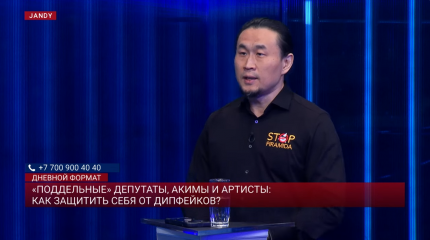
How can you protect yourself from deepfakes?

Activists call for an investigation into microfinance organisations
Тайм-код 41:31

Pyramid schemes: How can you recover your money?